
A backend-centric personal-finance platform with a real-time financial accountability engine — track spending, budget, forecast recurring bills, and turn everyday discipline into automatic savings.
Most money apps are built on fear.
Budgets, streaks, the guilt when you slip — they're very good at making you anxious, and not very good at making you wealthier.
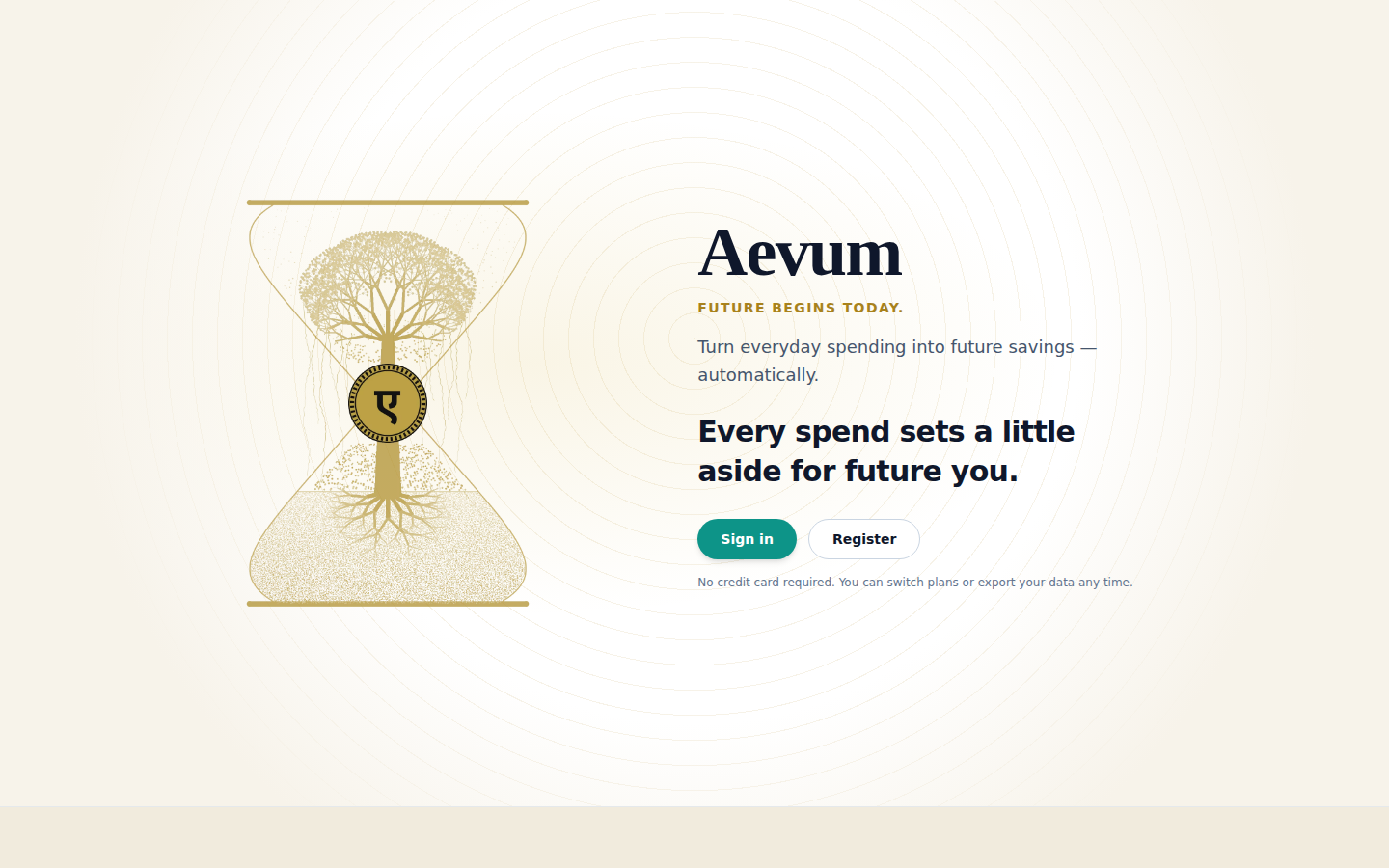
Aevum starts from the opposite premise: a small nudge you set yourself turns everyday spending into savings — a quiet push in the right direction that never becomes a shove. No pressure, no shame, no discipline required — just a calmer path to real wealth that grows while you live your life.
Aevum is Latin for an age — an enduring duration; time that accrues rather than runs out. In older philosophy it named the middle term between fleeting time and eternity: the duration of things that persist. It is the right word for money, the most patient thing you own.
Written another way, एवं is Sanskrit for "and" — together with. That is the other half of the promise: this isn't a tool for people who already speak the language of finance. It's for everyone else.
A provision, not a punishment
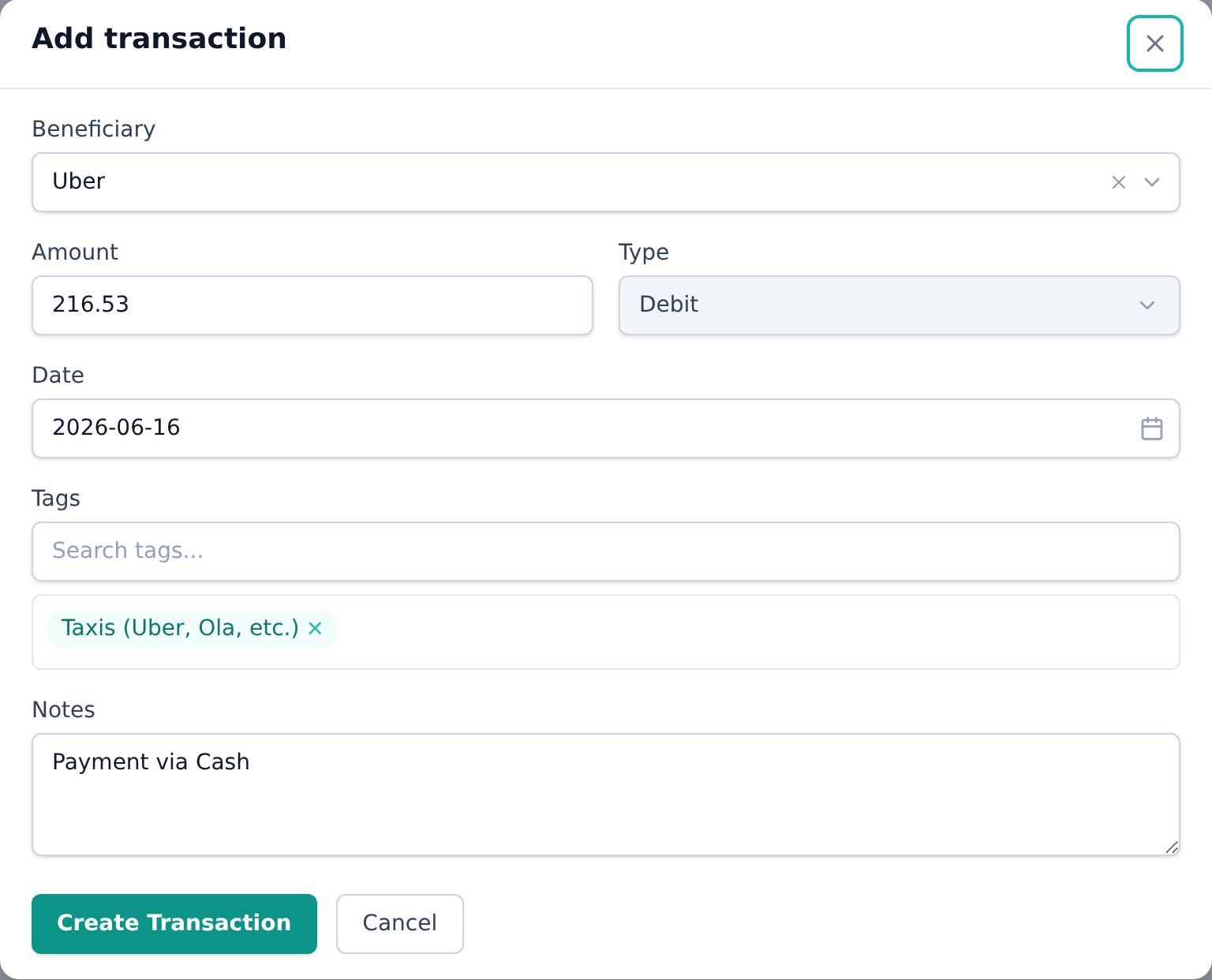
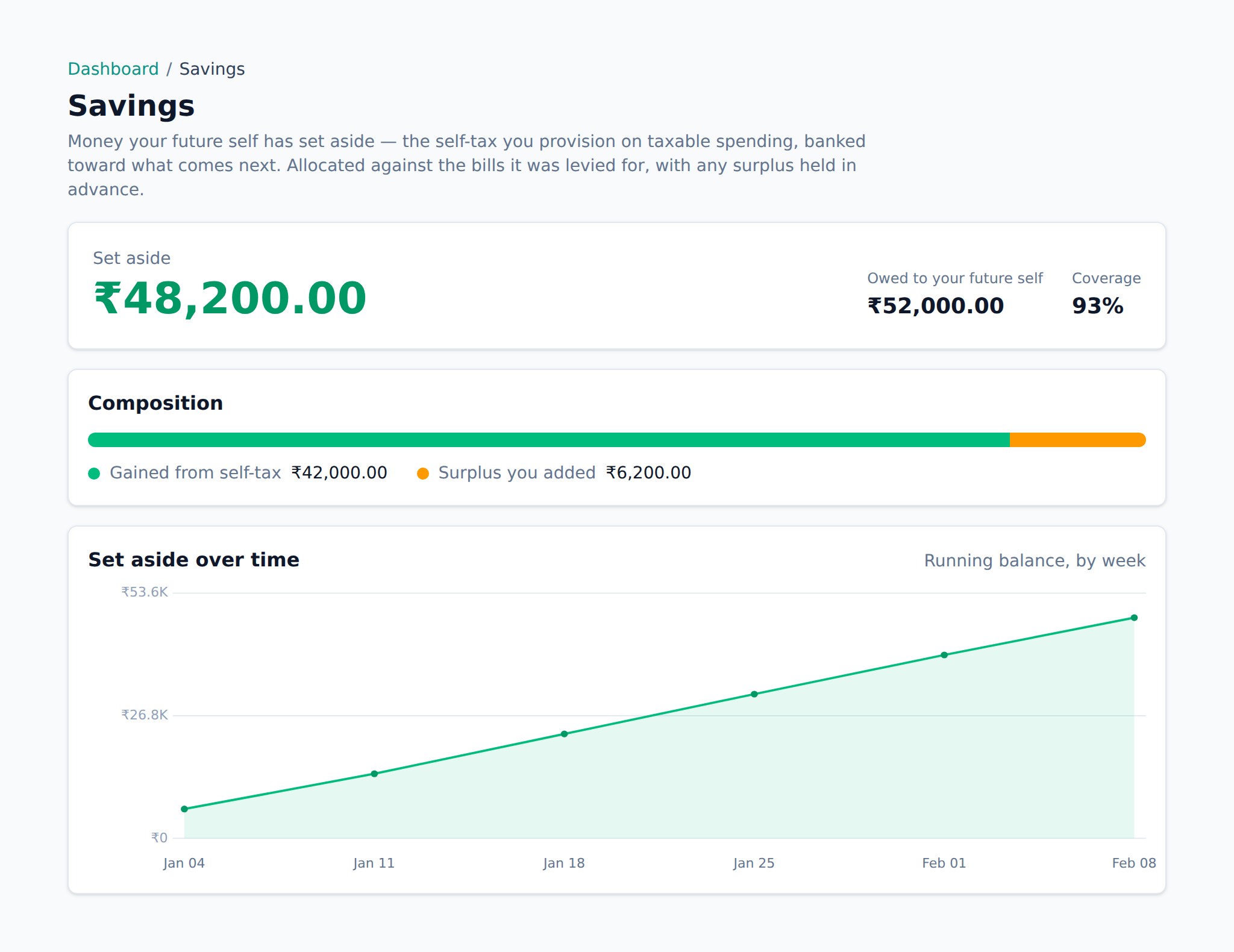
Most of what leaves your account leaves by habit: small, forgettable expenses that never quite turn into savings. Aevum changes that without asking you to budget harder or spend less. Every time you record an expense, it adds a small self-imposed "tax" on top — at a rate you choose, category by category — and moves that amount into a savings account you own. It isn't a fee and it isn't lost. It's your money, set aside for you, building a provision for the next expense of the same kind: spend on dining today and you're quietly funding future dining; spend on travel, future travel.
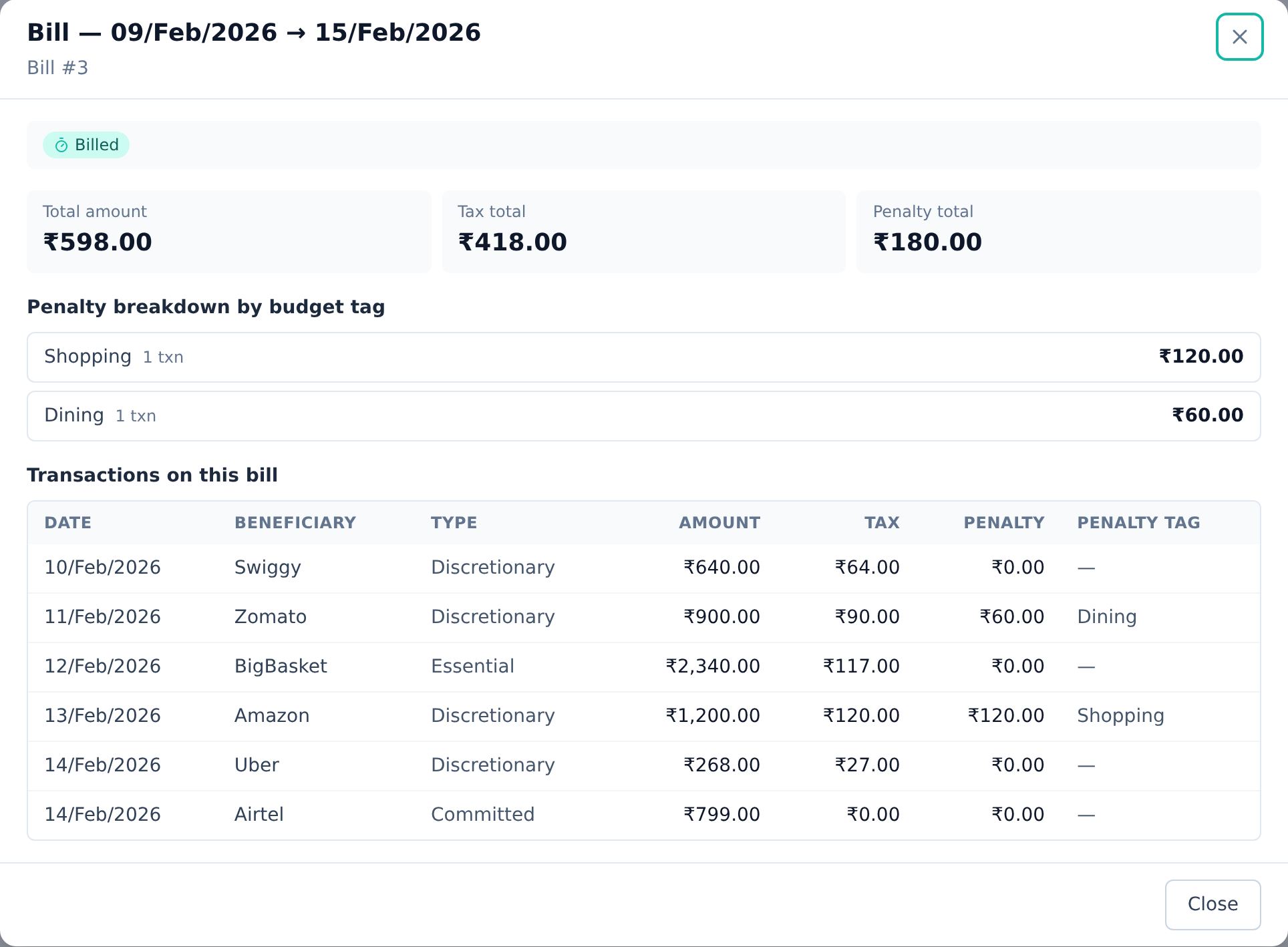
Set a budget on the things that matter, and going over adds a little more — not a punishment, just a sharper nudge you asked for. You stay in control the whole way: you set every rate, you can change or pause them anytime, and you can see exactly where each unit went.
Around that core, Aevum does the quiet work of a good assistant — categorizing your transactions, reading your statements, forecasting the recurring bills you tend to forget, and turning it all into clear analytics, while a weekly ledger tallies what you've set aside. No lectures, no alarms, no shame for spending. Just a steady, private habit that turns today's ordinary purchases into tomorrow's security.
The product, screen by screen
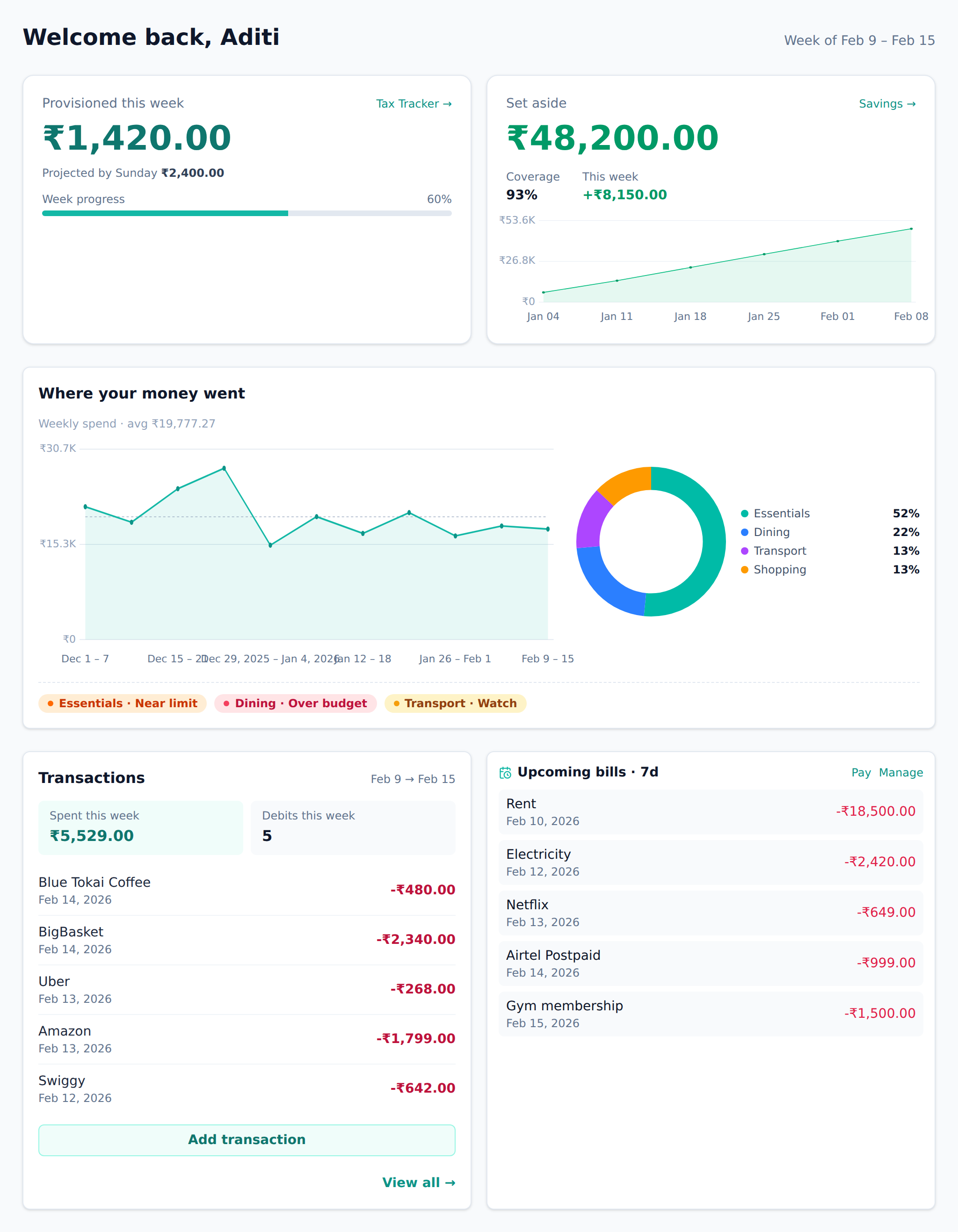
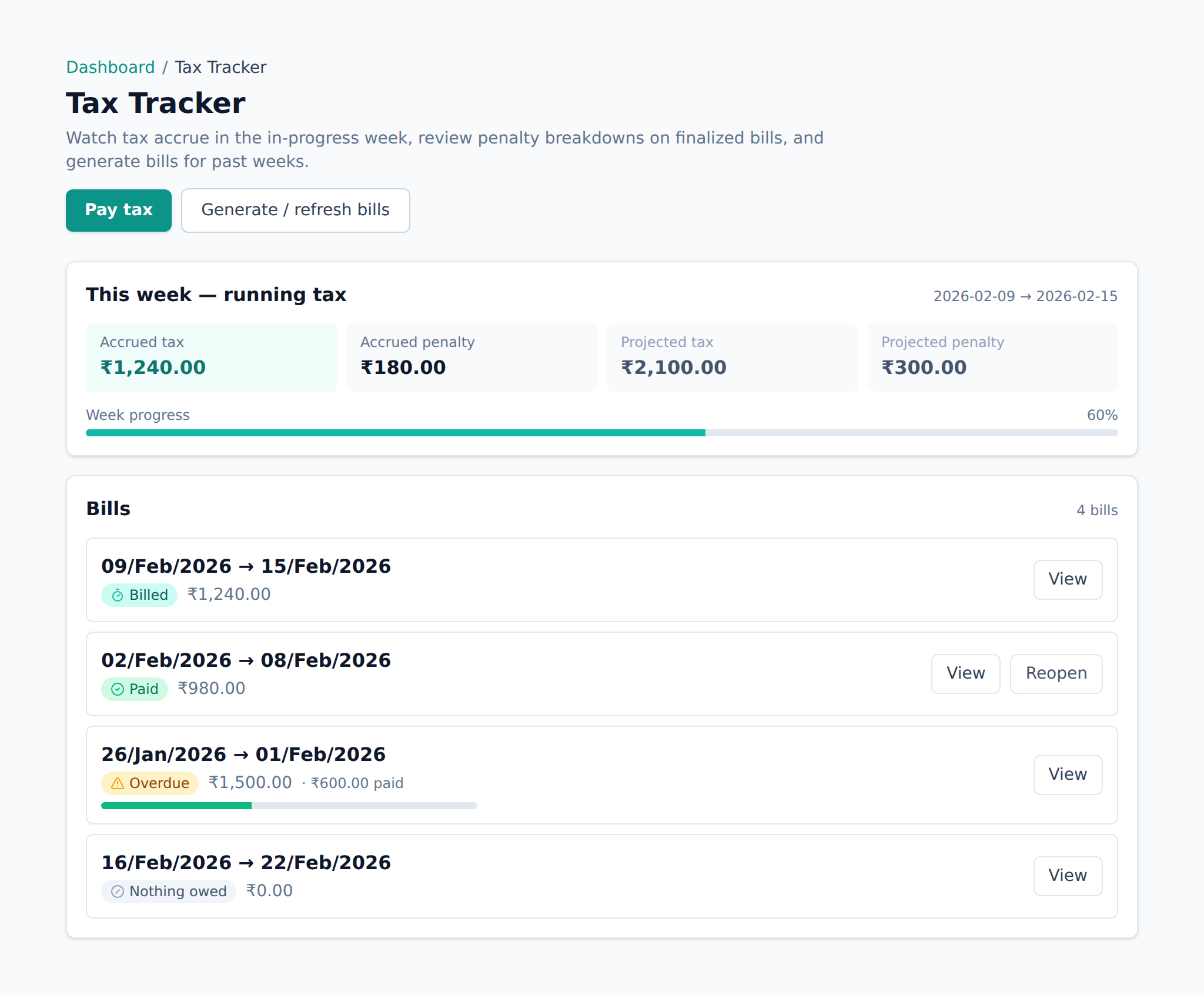
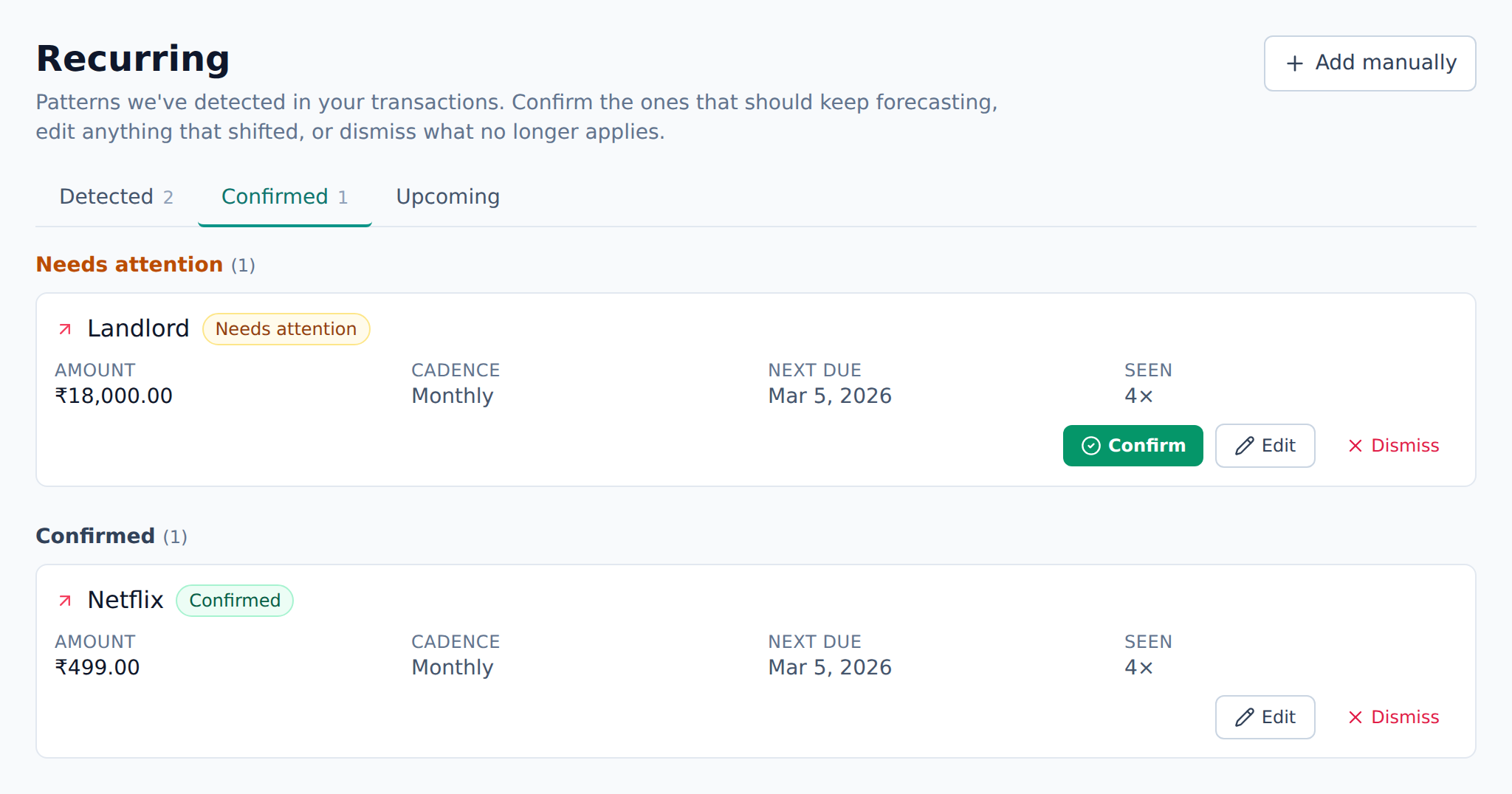
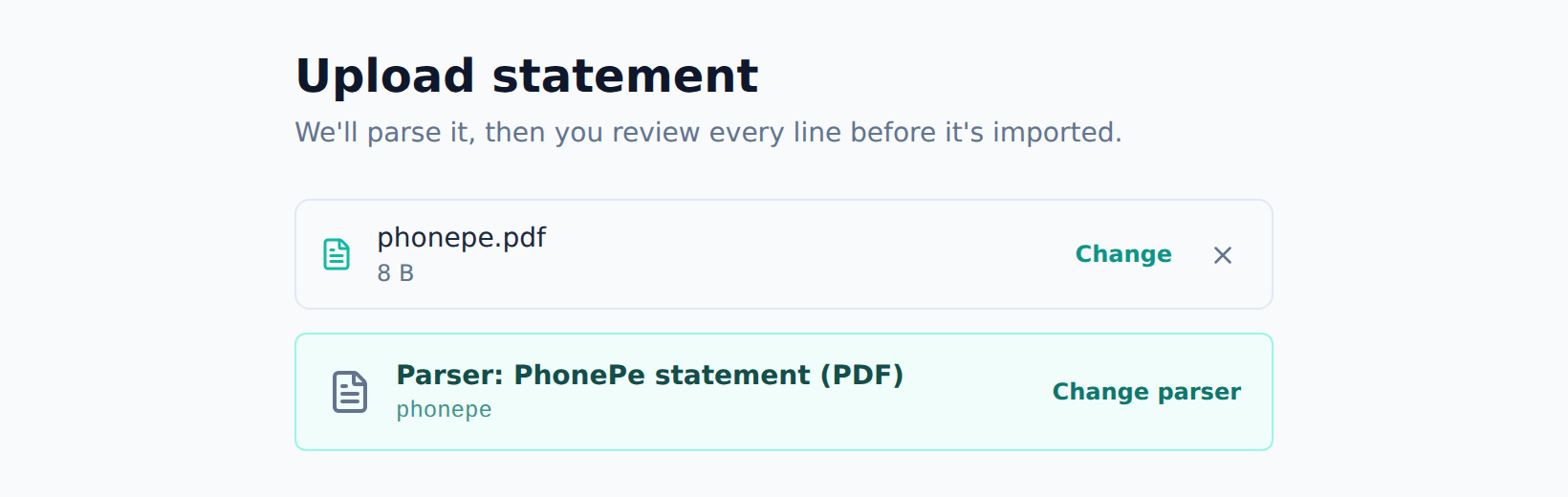
How it's engineered
A backend-centric build: the money logic, the correctness guarantees, and the shape of the code. The deep architecture docs are one link away; this is the human-terms tour.
Four systems doing the work
Financial Accountability Engine
Real-time weekly bill computation, a write-once tax ledger, a five-state bill lifecycle, breach penalties, and frozen-period adjustment posting.
Recurring Intelligence Engine
Detects repeating obligations from history, infers cadence, forecasts upcoming bills without writing transactions, and reconciles against reality.
Statement Processing & Categorization
Async ingestion → normalization → auto-tagging with dependency-safe downstream refreshes that keep budgets, analytics, and forecasts consistent.
Auth & Security
JWT auth, device-aware sessions, new-device verification, TOTP 2FA, recovery flows, and administrative safeguards.
A feature-based codebase
The directory layout names the business, not the framework — every capability
owns its models, schemas, services and routes in one place, layered core ← shared ← modules.
-
├─ core/infrastructure: config, the async DB engine, cache, scheduler, storage, middleware, the model registry -
├─ shared/ownerless cross-feature helpers (serial ids, calendar periods, password hashing / encryption) that depend only on core -
├─ constants/system-wide constants and reference data — one import surface -
├─ db/first-run migrate + seed -
├─ modules/the features — one directory each (see below) -
├─ web/the server-rendered landing page route (outside /api/v1) -
└─ main.pyentrypoint: wires every router under /api/v1
25 feature modules
14 user-facing, 11 infrastructure — each a self-contained feature that talks to others only through a public service contract.
Plus infrastructure AdminCemeteryEntitlementsLedger pipelineLegalMediaMetadataNotificationsPayments (UPI)RegistryRelationships
A production-scale build
Backend hot paths, measured on a Postgres testcontainer (indicative, not contractual): single-transaction tax recalc ~51 ms · transaction list (25/page) ~3.8 ms · categorize 500 statement rows ~22 ms. Benchmark suite: 69/69 modules green.
Designed & built solo
I owned Aevum end-to-end — architecture, financial engines, security, background processing, testing, and documentation.
- Architected Aevum as a service-oriented modular monolith with strict domain boundaries and cross-module access through public service contracts.
- Built the taxation engine that recalculates weekly obligations on every mutation, maintaining a write-once ledger with adjustment-based corrections.
- Designed an inference engine that forecasts recurring bills without writing transactions, then reconciles forecasts against reality.
- Kept correctness under statefulness — pure-engine/persistence separation, write-once ledgers, and frozen-period adjustments so history is never silently mutated.
- Python
- FastAPI
- PostgreSQL
- SQLAlchemy (async)
- Alembic
- Redis
- APScheduler
- OAuth
- JWT
- TOTP 2FA
- Pydantic
- Docker
- Pytest
Future begins today.
Aevum is live — try it, or dig into the developer API.